When Healing Had a Pulse: Myth, Ritual, and Song in a Clinical World
Modern healing is extraordinarily sophisticated — and, still, strangely anaemic. We can name symptoms, map trauma responses, and regulate the nervous system, yet many of us still feel uninitiated, unheld, and unfinished within the full spectrum of our human experience. What we are missing is not more information, but a language capable of touching the multidimensional spaces within us that never learned to speak in words.
Across cultures and time, healing has never been separate from ritual theatre, mythos, song, rhythm, story, and image. Before we had clinical language, we had symbol. Before we had frameworks, we had gesture. Before we had complex language, we had raw embodied sound. What we now call the Arts, were recognised as medicine for the ways that they directly interact with and affect the creative primordial current of existence that flows through us. The Arts recognises the truth that we are more than just flesh and bone; but a unique constellation of sensation, memory (inclusive of past lives and generational bone archives), story, and spirit — held together by forces that cannot be dissected without being diminished.
In Indigenous cultures across the globe, illness was rarely understood as a purely biological malfunction. It was relational. It belonged to the individual, yes, but also to the family, the land, the ancestors, the spirits, and the unseen currents that shape existence.
To heal was not to correct; but to re-weave.
To re-weave through the harmonious songlines that course through our veins. The symbolism that is encoded within every leaf, every stone, every moment, every movement. Through acts of ritual that intentionally midwifed the unseen into the seen; spirit into matter; a harmonious convergence at last. Ritual, myth, song, and image functioned as organic technologies of re-alignment, of Soul infrastructure repair, capable of restoring order across dimensions, timelines, and spaces that rational discourse alone cannot penetrate.
Yet today we face battle with a missing link. A thread in our vast tapestry that has been plucked out, discarded, and labelled as unnecessary in the grand unfolding of our now sterilised, rational, and clinical world. In our pursuit of precision, we have amputated meaning. In our devotion to objectivity, we have severed relationship. What cannot be measured, replicated, or neatly categorised has been exiled to the realm of superstition, art, or indulgence — no longer recognised as essential to the divine architecture of human vitality.
The modern clinical paradigm excels at isolating parts, but often struggles to hold the whole. The body is segmented. The psyche is analysed. Symptoms are extracted from story, from ancestry, from place. The imaginal realms and dreaming are gaslit into make belief, severing us from our innate tether to the living field of cosmic information (aka. The Akashic). In this fragmentation, mythos has been stripped of its authority, ritual reduced to habit, and song prostituted to entertainment. Healing has become something administered rather than enacted; something done to the body rather than something the body remembers how to do within a field of meaning.
What has been lost is not simply tradition, but an ancient way of knowing. Embedded into the unique cosmic signature of our Soul and engraved into the dense scaffolding of our bones. Myth was never just narrative; it was an orienting principle. A guiding star in a world of overwhelming complexity. It located the individual within a cosmology, within a lineage, within a living story larger than the personal Self. Through myth, suffering was contextualised. Pain, therefor, was not meaningless, but instead was initiatory, relational, and often communal. Suffering became a rite of passage that was revered by all those that bared witness. Without myth, suffering collapses inward. It becomes private, isolating, and disordered.
Ritual, likewise, was never symbolic theatre alone. It was a precise and embodied language through which the nervous system, the psyche, and the collective field could reorganise themselves. Much like myth, ritual created thresholds — clear passages between states of being: illness and health, grief and integration, childhood and adulthood, life and death. In the absence of ritual, we linger in liminal states with no container to carry us through. The body senses this incompletion, even when the mind cannot name it.

Día de los Muertos offers a compelling example of ritualised storytelling as a culturally embedded healing practice. Through the intentional use of storytelling, image, sensory symbolism, and ritualistic communal enactment; grief is externalised and held within a shared symbolic field rather than contained within the isolated psyche (much like how our modern world seeks to cope with grief). The ritual does not seek closure or resolution, but continuity of relationship, allowing memory and loss to be revisited cyclically rather than pathologised or suppressed. Ofrendas (alters) are tended to by families which act as an interface between worlds. Each element of the ofrenda is deliberate and is designed with an intentional role in this ritual. By situating death within a mythic and aesthetic framework - one that incorporates humour, beauty, and ancestral presence - the ritual reorganises meaning at both individual and collective levels.
Storytelling functioned as a bridge between inner and outer worlds. To tell a story was to metabolise experience; to shape memory into coherence, and to give form to the formless. Song carried this even further, bypassing the intellect entirely and moving directly through breath, vibration, and rhythm. Long before we understood the language of neuroscience, we knew that sound could regulate, synchronise, and restore. Song is the original forgotten mothertongue. Our foundational architecture is harmonic.
Bone, tissue, fluid, and field all organise themselves according to frequency. To sing, to drum, to speak rhythmically is to converse directly with the architecture that underlies matter itself. Ancient traditions across the globe understood reality as fundamentally harmonic. The cosmos was not imagined as static substance, but as living resonance—an ever-moving intricate interplay of vibration, tone, and pattern. From Indigenous cosmologies to Eastern philosophies, from African rhythmic lineages to Amazonian song traditions, existence was perceived as something sung into being, sustained through vibration, and restored through resonance when it fell into dissonance.
In many African tribal traditions, healing ceremonies involve drumming, dance, song, and embodied trance. Rhythm is not ornamentation; it is intentional technology. The drum establishes a sonic architecture within which the body can reorganise itself; thus entraining* the nervous system, altering consciousness, and opening the body to communal regulation. When we drum, allowing the body to enter into trance, we invite the Spirit to descend down into the unconscious layers. Through trance, we access the shamanic realms. Healing occurs through this participation; through being moved, witnessed, and carried by the collective rhythm. The body remembers how to return to balance because the rhythm reminds it through shared relational DNA. *Entrainment - the phenomenon by which two or more systems begin to move in synchrony - refers to the process through which rhythmic entities adjust to one another until they share a common frequency.
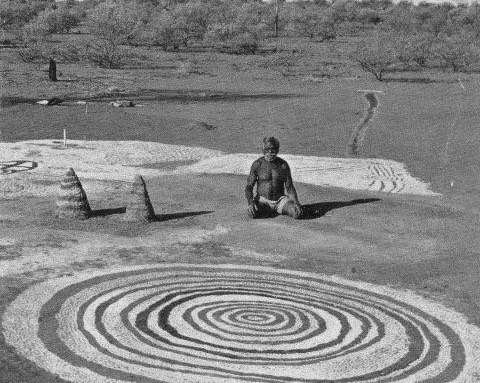
We also see in many Aboriginal Australian nations, the way that songlines (dreaming tracks) function not only as navigational maps across the land, but as living cosmologies; encoded systems of knowledge that hold memory, lore, ancestry, and creation itself. Songlines trace the movements of ancestral beings across Country during the Dreaming, marking not only pathways through geography, but pathways through time, relationship, and responsibility. When coherence between person, land, and Dreaming is disrupted, illness may arise. Healing occurs through re-enactment: the voice moves, the body walks, memory is restored. The ritual itself re-establishes order.
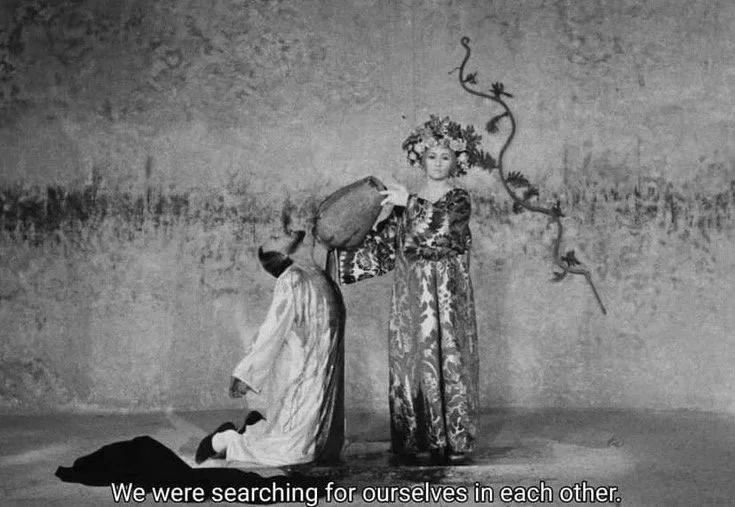
In Alejandro Jodorowsky’s Psychomagic - a body of work that insists the unconscious is not persuaded by explanation - Psychomagic moves in the space where shamanic ritual, psychoanalytic insight, theatrical gesture, and surreal imagination converge. Drawing from shamanism, theatre, psychoanalysis, and surrealism, Psychomagic proposes that unresolved psychological material is best addressed not through dialogue alone, but through acts that speak in the syntax of the psyche itself. These acts are ritualised interventions—often poetic, strange, or theatrical in form—designed to bypass the analytical mind and enter the imaginal realm where belief, memory, and identity are actually organised.
In this way, Psychomagic mirrors the logic of ritual found across Indigenous traditions. Like the icaro (Shipibo Konibo lineage), the drum, or the songline, the act is precise, intentional, and embodied. It creates a threshold. It marks a before and an after. It restores movement where stagnation has taken hold. Healing does not occur because the mind agrees—it occurs because the nervous system, the unconscious, and the imaginal body recognise something true and begin to reorganise around it.
To offer perspective from the West: The Venetian Carnival. Il Carnevale di Venezia emerged around the 11th–12th centuries. Venice at the time was a mercantile empire — wealthy, stratified, politically volatile, and psychologically dense. Social roles were rigid. Surveillance was constant. Reputation was of the utmost importance.
The mask arose not as entertainment, but as a social pressure valve.
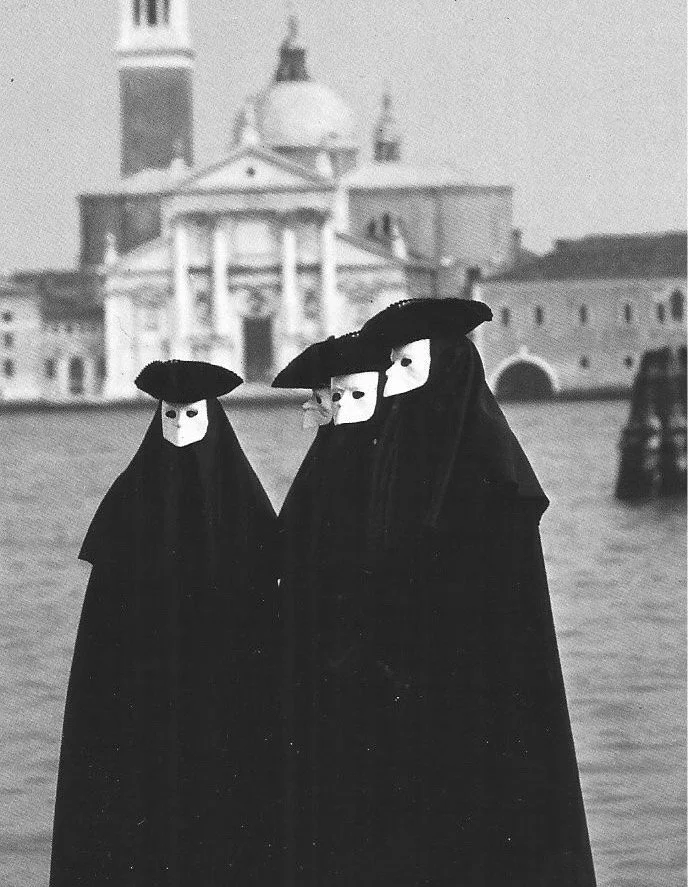
When masked, Venetians entered a sanctioned liminal state. Laws were temporarily loosened. Moral codes softened. Identity became porous. This was not chaos for chaos’ sake — it was regulated transgression, a collective ritual of release. The city itself became the container. Early Venetian masks (particularly the Bauta) were deliberately plain. White. Expressionless. Unadorned. They were intentionally designed to erase the personal face, not decorate it.
This is psychodrama in its original form: suffering, desire, rebellion, grief, eroticism, and shadow were moved through the body, in public, without analysis or confession.
From a healing perspective, this is regulation through ritualised liminality.
Carnival created a contained field in which the collective shadow could be enacted rather than repressed. Instead of private breakdowns or violent uprisings, tension was metabolised communally. What modern psychology would call repression, projection, or acting out, Venice addressed through rhythm, theatre, and time-bound permission.
In this way, Carnival functioned much like Indigenous rites of passage, trance ceremonies, or communal grief rituals: it prevented psychic congestion. It kept the collective body from turning against itself.
It is human nature, when we abide by the laws of nature, to relate to the entirety of our animate world through storytelling, psychodrama, mythos, and song. These are not cultural embellishments layered onto life; they are the means by which we access the deeper, hidden strata of the soma. Through them, we remember how to feel, how to listen, how to perceive beyond the narrow aperture of intellect alone.
To engage in this way is to allow ourselves to merge with our environment rather than stand apart from it. Healing does not occur in separation. It unfolds in relationship. And relationship does not mean only with another of the same kind. It means in relation to all that crawls, all that flies, all that flows, all that bites, all that is still, and all that moves. It means recognising ourselves as participants within a living, breathing field of intelligence.
We are shaped through our relationship with the winged ones and the feathered ones, the furred ones and the scaled. Through the gushing waters and the stagnant waters. Through the raging wildfires and the howling winds, as much as through the subtle breeze that barely stirs the leaves. Each holds a language. Each carries instruction. Each mirrors a facet of our own interior landscape.
To heal is to remember how to be in dialogue with this animate world — to acknowledge its presence, its agency, its responsiveness. Yet to enter into relationship with the more-than-human world, we must speak its language. And this language does not operate through analysis or abstraction. It does not yield itself to linear explanation. It speaks through symbol, through image, through rhythm and resonance; through beauty and through expression. It speaks through the primordial creative pulse that animates all life. This is the language of our Earth. This is what it means to speak in the primordial tongue.
Story, ritual, song, and art are the interfaces through which this communication becomes possible. They are the bridges between inner and outer worlds, between body and landscape, between human experience and the vast intelligence that surrounds and permeates it. Through them, the soma opens. Memory stirs. Perception widens. The boundaries between Self and world soften, and coherence begins to return.
So where does that leave us now?
We find ourselves at an inflection point. Beneath the surface of our hyper-rational, technologised world, something older is stirring. The arts are returning. Poetry is finding its way back into the mouth, onto the tongue, into the chest. Words are no longer content to behave; they want to move us. To loosen something. To touch what has been held too tightly for too long. Creative theatre is shedding the safety of the stage and stepping closer, asking us not to watch, but to enter. To inhabit the story with our breath, our weight, our trembling limbs. We are witnessing a collective Soul Retrieval taking place.
And these practices are not attempting to replace science or therapy; they are restoring what was never meant to be absent. They offer a terrain where the ineffable can be touched without being reduced. It is giving us a platform to allow the intangible, the unexplainable, the non-material to be translated into a language that resonates at the level of our bones, of our blood, and of our breath.
The role of Mythos, Ritual, Storytelling, and Song in our modern world?
Revival.
Restoration.
Retrieval.
If something in you has stirred while reading…that is not coincidence. That is the body recognising its own language. Listen.